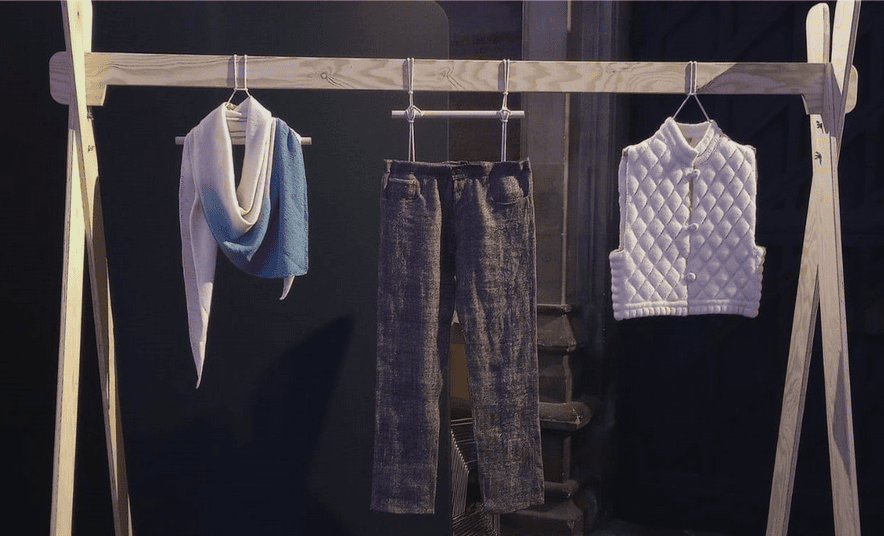

Brigitte Kaltenbacher, also known as BeeKayMakes, has developed the project "Let's Grow Flax" in 2023, she launched an extraordinary example of sustainable textile production. Together with around 30 fellow campaigners, she grew flax on small plots of land in Surrey and Hampshire - sometimes in the garden, sometimes even in flower pots. The aim was to produce a finished item of clothing from the locally grown plant: a pair of linen jeans.
Two thirds of the harvested flax plants were channelled into a joint production project. In collaboration with a micro-spinning mill, the Fantasy Fibre MillAround 10 kilograms of straw, 2 kilograms of fibres and 1.2 kilograms of yarn were produced from around 40 square metres of flax cultivation. This yarn was spun into the warp of a linen denim fabric. Brigitte Kaltenbacher spun the weft thread by hand and dyed it with natural dyes - including gall ink made from oak and onion skins. The resulting fabric was sewn into a pair of jeans - without metal parts, with wooden buttons and vegetable-dyed Tencel yarn as sewing thread.
What is special about this project is not only the depth of craftsmanship, but also the complete transparency and regionality of the production chain: from seed to finished trousers, everything took place within a 50-mile radius of Farnham. Kaltenbacher built up a local network of flax farmers, craftswomen and designers - in line with the Fibreshed movement, which is committed to bioregional, regenerative textile cycles. Tools such as crushers and hackles were built according to open source plans and made available in order to bring old knowledge back into the present.
Brigitte Kaltenbacher presented the project in her lecture "From Garden to Garment" and gave an impressive insight into the processes, challenges and opportunities of regional textile production. The resulting jeans have already been part of exhibitions, including at the Farnham Museum and as part of "Fashion on Earth" in Bristol, and were also presented on British radio.
The "Let's Grow Flax" project shows how a small seed can not only become an item of clothing, but also a social impulse - for sustainable production, community learning and artisanal self-empowerment. It encourages a return to local resources and inspires imitation.
You can listen to the talk here HERE
 Deutsch
  English (UK)